Breaking Rule-Based Limits: 3 Key Advantages of AI-Powered Optical Inspection in Semiconductors
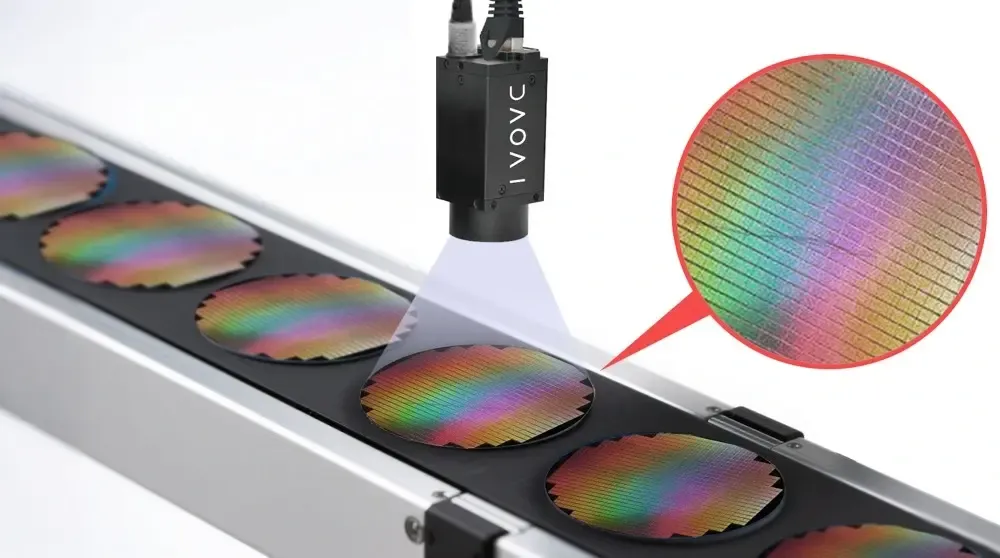
Using AOI (Automated Optical Inspection) to check wafer surface condition and detect metallic residue or scratches is ...
August 26, 2025
As AI-powered Automated Optical Inspection (AOI) gains momentum across electronics manufacturing, more factories are exploring how to bring deep learning onto t
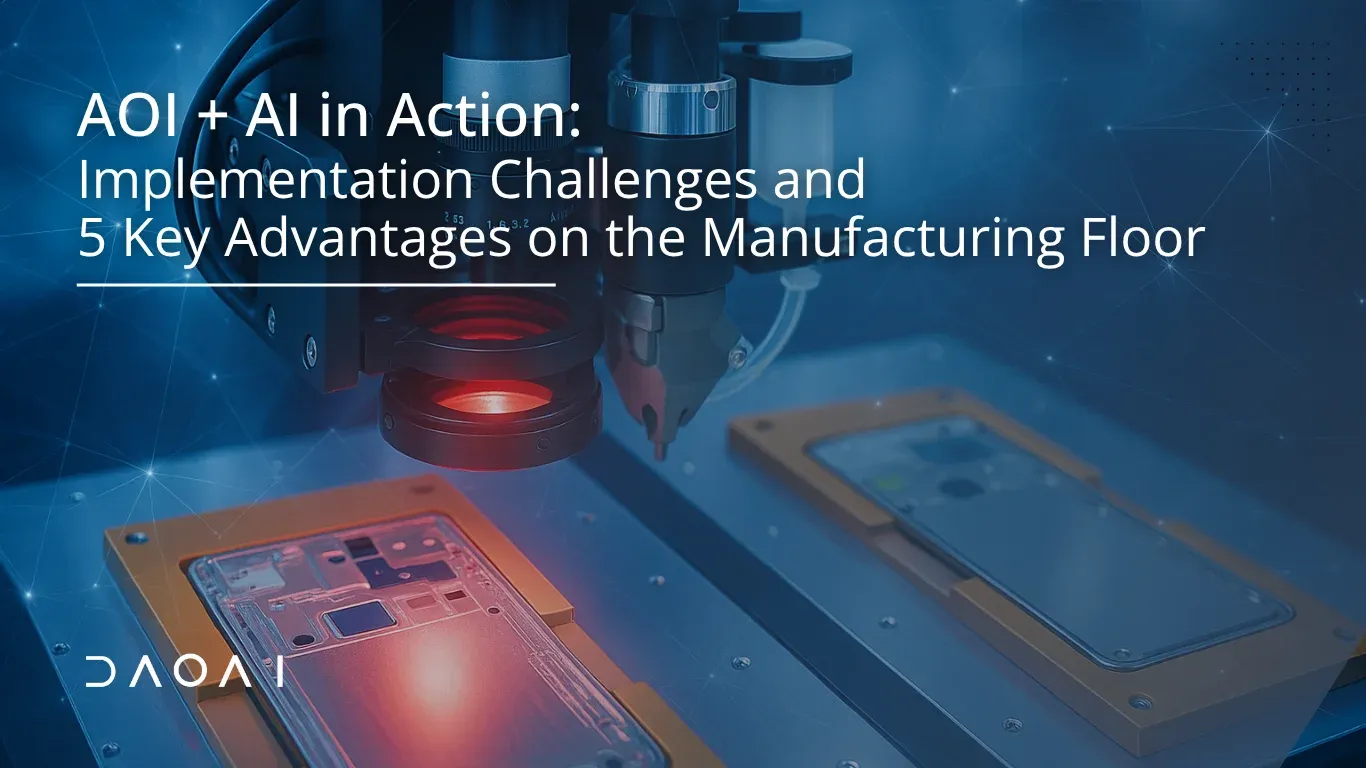
As AI-powered Automated Optical Inspection (AOI) gains momentum across electronics manufacturing, more factories are exploring how to bring deep learning onto the production floor. The promise is clear: higher defect detection rates, lower false calls, and less reliance on manual re-inspection. But the path from pilot to production is rarely straightforward.
In this article, we break down the real-world implementation challenges manufacturers face when deploying AI-enhanced AOI, and highlight five key advantages that make the investment worthwhile.
In a well-run production line, defective samples are rare. That is great for yield, but problematic for AI training. Traditional deep learning models require large volumes of labeled defect images to learn effectively. When negative samples are scarce, models may underfit, failing to detect subtle or uncommon defect types. This "data hunger" is one of the biggest barriers to AI AOI adoption, especially for manufacturers producing high-quality products with low defect rates.
Reflections, shadows, and uneven brightness across the inspection field can cause AI models to misidentify lighting artifacts as defects, or miss real defects masked by glare. Unlike rule-based systems where engineers manually tune thresholds per lighting zone, AI models must learn to generalize across these variations, which demands careful data augmentation and robust preprocessing pipelines.
Most factories already have legacy AOI equipment, MES systems, and established workflows. Introducing AI into this ecosystem means dealing with compatibility issues, data format conversions, and operator retraining. A successful deployment requires not just a good algorithm, but a solution that fits seamlessly into the existing production infrastructure.
AI models excel at identifying diverse and irregular defects that traditional rule-based AOI systems struggle with. By learning from real-world production data, AI can detect subtle anomalies such as micro-cracks, solder bridging, and component misalignment with significantly higher precision. Manufacturers adopting AI AOI have reported detection accuracy improvements from around 90% to over 99%, directly boosting yield and reducing the cost of escaped defects.
Manual re-inspection stations are a bottleneck in many factories. Human inspectors are prone to fatigue, especially during long shifts, leading to inconsistent judgment and missed defects. AI-powered AOI operates reliably around the clock, eliminating the impact of human fatigue and subjective bias. This allows manufacturers to redeploy skilled workers to higher-value tasks while maintaining consistent inspection quality 24/7.
High false reject rates are one of the most frustrating aspects of traditional AOI. Every false call means wasted time at the re-inspection station and unnecessary production delays. With AI's feedback-based tuning capability, the system can flexibly adjust its detection criteria based on real production feedback, effectively reducing both false rejects and escapes. This translates directly into lower scrap rates, less rework, and faster throughput.
Modern electronics manufacturing increasingly demands flexibility. Product changeovers happen frequently, and each new product brings different components, layouts, and potential defect types. AI models can be quickly trained and transferred across product variants, making them ideal for high-mix environments. This adaptability reduces switching costs and maintenance overhead, giving manufacturers the agility to respond to changing market demands.
Perhaps the most transformative advantage is the reduction in deployment complexity. Using techniques like "single good sample modeling," manufacturers can build effective inspection models without collecting thousands of defect images. Combined with continuous learning capabilities, the system improves over time as it processes more production data. This dramatically lowers the barrier to entry, allowing even small and mid-sized manufacturers to benefit from AI-powered inspection.
Implementing AI AOI on the manufacturing floor is not without its challenges, but the advantages far outweigh the hurdles. From higher accuracy and lower labor costs to unprecedented adaptability, AI-enhanced inspection represents a fundamental shift in how manufacturers approach quality control.
The key is choosing a solution that addresses the real-world challenges head-on: one that works with limited defect data, integrates smoothly with existing equipment, and empowers operators rather than overwhelming them.
Ready to see what AI AOI can do for your production line? Contact us to discuss your inspection challenges.
See how DaoAI's AI-powered AOI cuts false rejects, slashes programming time, and pays for itself.
Using AOI (Automated Optical Inspection) to check wafer surface condition and detect metallic residue or scratches is ...
August 26, 2025
In the modern manufacturing inspection landscape, AI AOI (Artificial Intelligence Automated Optical Inspection) is ...
August 20, 2025
Global Stage for Smart Manufacturing Innovation This year, the DaoAI team attended Hannover Messe 2025 in Germany, ...
April 16, 2025
AI inspection insights, product news, and industry analysis. Once a month, no noise.
We use your details to reply to your enquiry. See our Privacy Policy.