Missing and Wrong Components on PCBA: Detection and Prevention
Missing parts are usually a pick-and-place problem; wrong parts are usually a material setup problem. Here is how each is caught by inspection and how to prevent both.
September 28, 2026
A reversed diode, capacitor or IC can kill a board at power-up. Here is what causes polarity errors, how AOI checks orientation, and the controls that prevent them.
A reversed polarity defect is a polarized component, such as a diode, LED, tantalum or electrolytic capacitor, IC or connector, placed with pin 1 or the cathode on the wrong pad. AOI catches it by locating the part's polarity mark, such as a band, dot, notch or bevel, and comparing its position with a known-good reference board.
Unlike solder defects, reversed polarity almost never comes from paste, stencil or reflow. It is a data, material or handling error, and the common causes are:
Reversed polarity is a close relative of missing and wrong components: the same setup checks catch both.
Manual inspection relies on reading small polarity marks across hundreds of positions, which is where fatigue sets in. SPI runs before placement and cannot see orientation.
2D AOI is the main tool. It finds the polarity feature on each part and checks its position against the reference, and OCR or OCV of the marking confirms orientation on ICs. The practical difficulty is variation: a new supplier's mark in a different place or style can cause false calls, or be wrongly accepted if thresholds are loosened to stop them.
3D AOI can help where the polarity feature is a physical shape, such as a beveled edge or molded notch, rather than a printed mark. AXI is rarely used for polarity. In-circuit and functional tests catch many reversals electrically, but after soldering, when rework costs more.
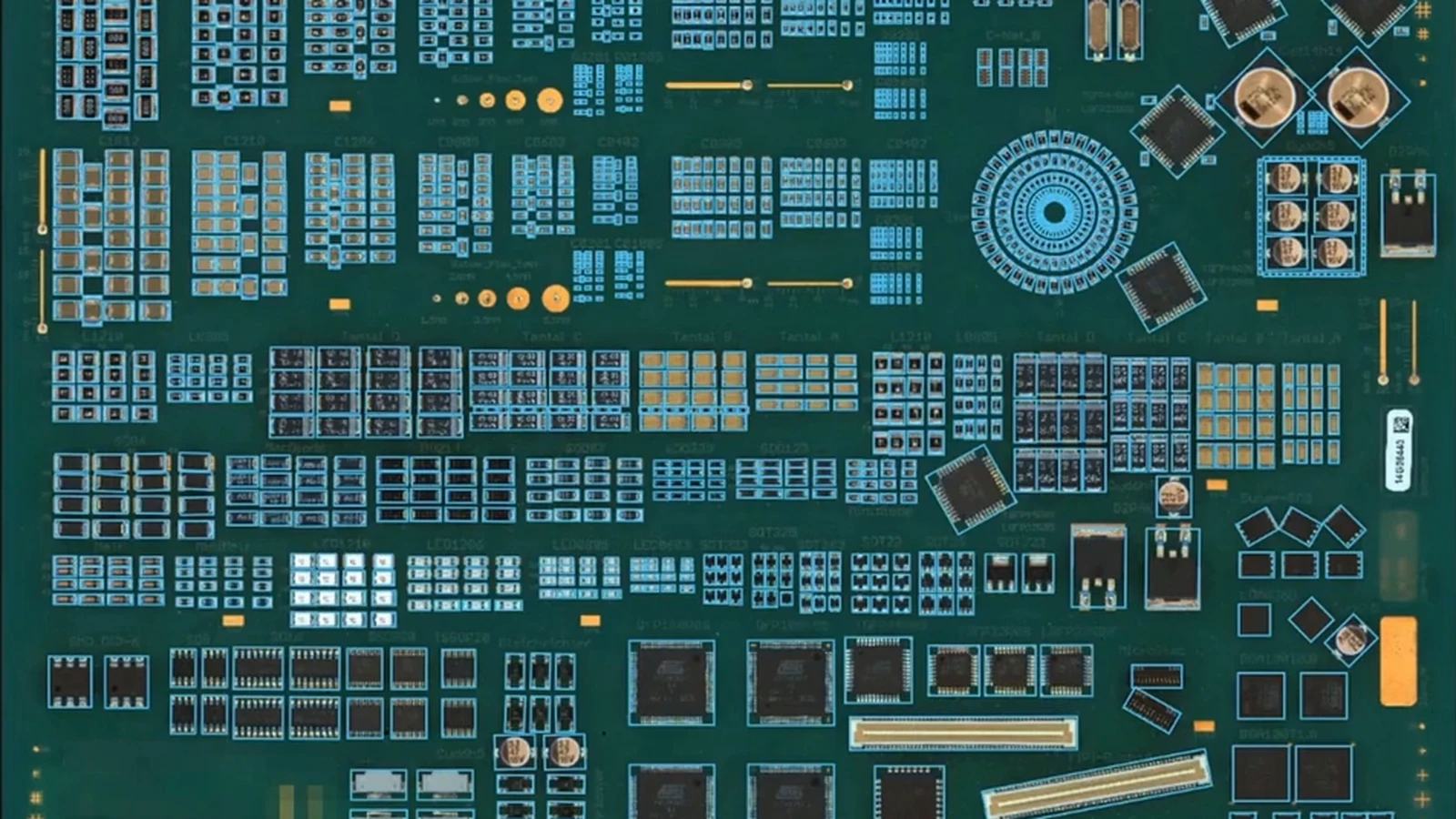
In DaoAI's inspection coverage, item 02, Placement, Orientation & Polarity, covers incorrect polarity along with rotation and upside-down (flipped) placement. Component polarity and component orientation are both among the core detection capabilities that AI auto-programming generates from one golden board.
When a different supplier's part carries a different body shape or marking, operators mark the acceptable variation as OK so the AI learns it across the component group. For through-hole polarity, the DaoAI A3 checks component bodies for missing, wrong and reversed parts in pre-wave and post-wave inspection, on both sides of the board with one machine; a pre-wave catch means the part can still be turned by hand. The P3 and P5 also support DIP / through-hole inspection.
Because a program error reverses every board, first-article inspection is the most valuable single control. The table maps each cause to its prevention.
| Cause | Prevention |
|---|---|
| Rotation error in CAD or library | Verify every polarized part on the first article against the assembly drawing; standardize the zero-orientation convention (0°, 90°, 180°, 270°) between CAD and placement libraries. |
| Supplier tape orientation change | Check pin 1 position in the tape pocket for every new supplier or lot before loading. |
| Tube or tray fed backward | Mark the feed end on tubes and trays, and include orientation in the setup verification. |
| Manual insertion error | Use clear polarity silkscreen, keyed or asymmetric footprints where possible, and inspect pre-wave. |
| Ambiguous polarity marking | Put polarity marks outside the component body outline so they stay visible after placement. |
Bring the board with the part your current AOI keeps misjudging. Send us one of your own boards and we will test it for you, free of charge.
Diodes, LEDs, tantalum and electrolytic capacitors, ICs and connectors are the usual cases. Through-hole electrolytic capacitors are frequent offenders when inserted by hand.
Only if the part has another visible asymmetry, such as a bevel, notch or lead arrangement. If a polarized part has no visible feature at all, electrical testing is needed.
Different suppliers place or style polarity marks differently, so a correct part can look unfamiliar to the inspection program. Teaching the system the new appearance fixes the false call without loosening the check.
A reversed part is rotated so its polarity is wrong but it sits the right way up. A flipped part is upside down, with its marking face against the board.
Missing parts are usually a pick-and-place problem; wrong parts are usually a material setup problem. Here is how each is caught by inspection and how to prevent both.
September 28, 2026
DaoAI vs Nordson YESTECH AOI: golden-board vs CAD-and-library programming, inline 3D, through-hole, on-machine AI, and how to test both on your boards.
October 7, 2026
DaoAI vs CyberOptics (Nordson) SQ-series 3D AOI: golden-board vs library-based programming, inline 3D, through-hole, on-machine AI and how to test both.
October 7, 2026
AI inspection insights, product news, and industry analysis. Once a month, no noise.
We use your details to reply to your enquiry. See our Privacy Policy.