AI AOI vs. Traditional Rule-Based AOI: Don't Overlook These Hidden Costs
From programming time and false calls to staffing burden, changeover efficiency, and quality visibility — here is how EMS teams should evaluate AI AOI.
April 14, 2026
Board images are your customers' design data. Here is why AI AOI should run, learn and store data inside your plant, and what to ask any vendor claiming to be on-premise.
On-premise AI AOI means image capture, inspection, model training and data storage all happen on hardware inside your plant, with no connection to a vendor's cloud. Board images are your customers' design data, often covered by NDAs and, for defense work, by export-control rules, so the safest place for them is the machine that took them. DaoAI machines work this way by default: no cloud, no account, no internet connection required, and model training runs offline on the machine.
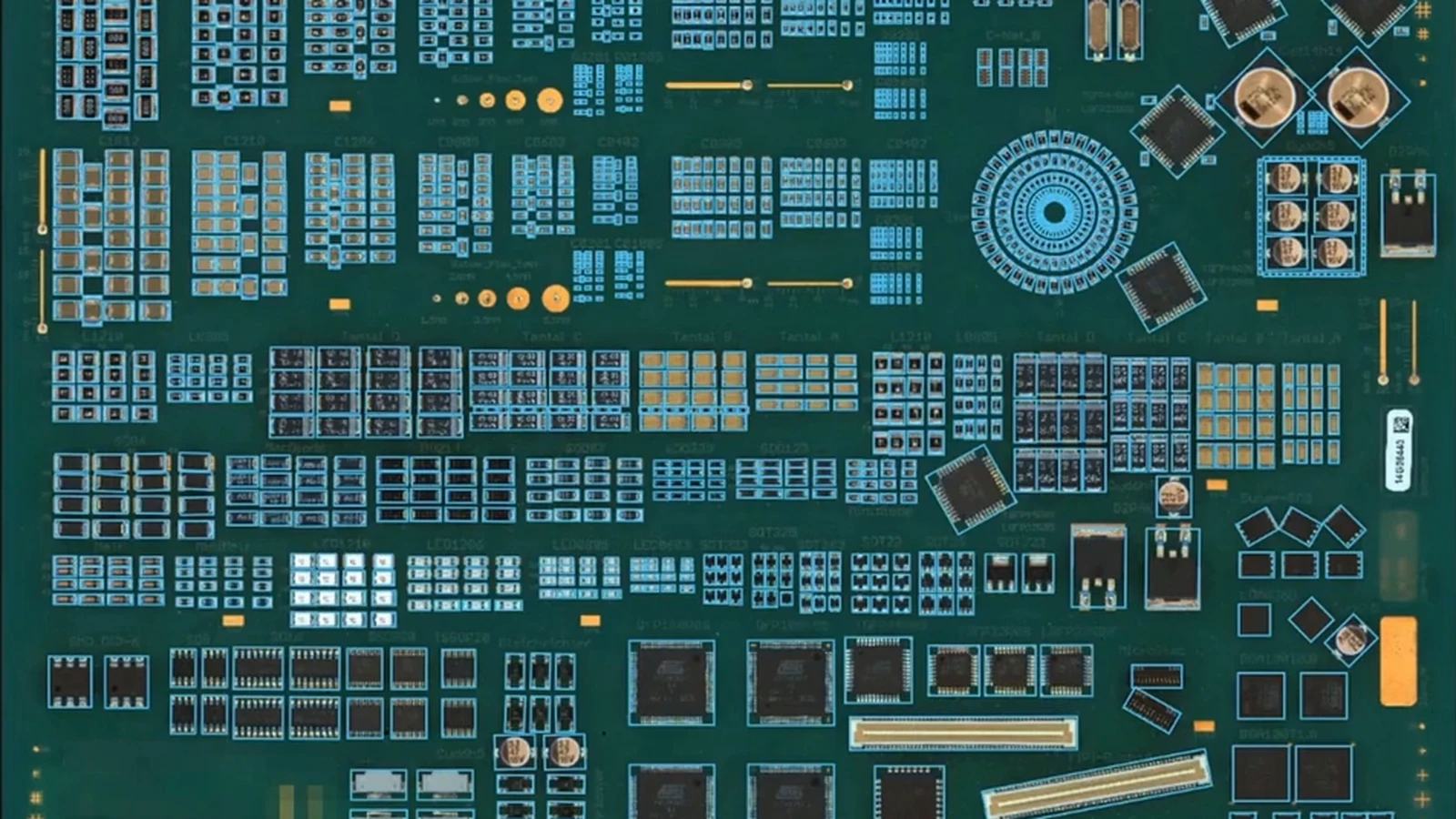
A high-resolution image of an assembled board shows the layout, the component choices, the part markings, the revision label and often the serial number. At 10 to 15 µm per pixel, the fine detail is readable. Across a whole program, that is close to a visual bill of materials for the product.
The inspection data around those images is sensitive too. Defect history, first pass yield and false call rates describe how well your process runs, which is commercially sensitive for any EMS provider.
For a contract manufacturer, most of that information does not belong to you. It belongs to the OEM whose board is on the conveyor, and you hold it as a custodian under their terms.
Terms vary, but many NDAs and supplier quality agreements share a few patterns. They limit use of design data to manufacturing the customer's product, restrict disclosure to third parties, and require notice or approval before data goes to a subcontractor or outside service.
Supplier security questionnaires then ask where data is stored, who can access it and in which country. A cloud-processed AOI turns the AOI vendor, and that vendor's cloud provider, into a party that handles customer images. That has to be disclosed, and some customers will say no.
An AOI that never sends images out of the plant removes that question from the questionnaire. The data stays inside the boundary you already manage for your CAD files, travelers and test logs.
In the United States, ITAR controls technical data related to defense articles, and making that data accessible to a foreign person, including through servers or cloud storage, can count as an export unless specific conditions are met. Images and inspection programs for a defense assembly may qualify as technical data. Whether they do is a decision for your export compliance officer.
Defense supply chains add further rules for controlled unclassified information, such as NIST SP 800-171 and CMMC requirements, which govern where that information is stored and processed. In Canada, the Controlled Goods Program sets similar expectations for who may examine controlled goods and related data.
DaoAI does not claim any ITAR, CMMC or Controlled Goods certification, and nothing here is legal advice. What an on-premise architecture does is keep images and models inside the facility you already control, so your existing compliance program covers the AOI instead of needing a new exception for it.
Some systems describe themselves as on-premise while still depending on a vendor connection for licensing, training or updates. Use this checklist when you evaluate any AI AOI, including ours.
| Question to ask the vendor | Why it matters | DaoAI |
|---|---|---|
| Does inspection run with no internet connection? | Controlled lines are often network-isolated | Yes. No cloud, no account, no connection out of the plant |
| Where are board images stored? | Determines who can access customer data | On your machine; every inspection is stored with its images and verdict |
| Does model training require uploading images? | Training data is the most complete image set you hold | No. Training runs offline on the machine with no image upload |
| Who owns the trained model? | A model trained on your boards encodes what they look like | You do; it is not shared with other customers |
| How do false calls get fixed? | Vendor retraining usually means sending images out | Operator feedback and AI Update on the machine; nothing leaves the machine |
| How do results reach the MES? | Data should move only over your own network | CSV results, defect crops and whole-board images, with defect codes mapped to your MES |
| Who can change programs and models? | Limits accidental and unauthorized changes | Permission levels: program, tune and train, or inspect only |
| How does vendor support work? | Support access is a data path too | Remote support is optional and off unless the customer enables it; the system has no backdoor access |
Many AI inspection products improve in one of two ways: the vendor retrains a shared model and ships it, or the customer uploads images so the vendor can retrain for them. Either way, your images or your improvements live in a dataset you do not hold, and fixes arrive on the vendor's release cycle.
DaoAI starts from a visual foundation model trained on over 1,000,000 real production images, then adapts it to your board locally. When an operator marks a false call at the review screen, that example goes into the product's dataset on the machine, and an AI Update retrains on it there.
For defects specific to your products, model training lets your team collect images, label them OK or NG, train, evaluate on held-out images and apply the model, all inside the inspection software without an internet connection, cloud service or online account.
An isolated line still needs programs going in and results coming out. The practical pattern is to keep every one of those flows on your own network or on media you already control.
Because every DaoAI machine runs the same core software, these rules apply the same way on an offline P1 beside the line and on an inline 3D P5 in it.
Cloud processing has real advantages: the vendor handles model updates, and a fleet dashboard across several plants is easy to build. For a single-product OEM that owns its own designs, that trade can make sense.
For an EMS provider holding many customers' designs, the calculation usually runs the other way. Every customer's NDA, questionnaire and export rule applies to wherever the images go. For a broader comparison of approaches, see AI AOI vs. traditional rule-based AOI for EMS.
A system that learns on the machine also keeps the improvement where it belongs. DaoAI's feedback learning puts each correction into a labeled example in your dataset, with the image attached, rather than into a request to a vendor.
No. DaoAI machines run on-premise with no cloud, no account and no internet connection required; inspection, feedback learning and model training all run on the machine. Remote support is optional and off unless the customer enables it; the system has no backdoor access.
Not for inspection or training. Board images stay on your machine and in the systems you export them to, such as your MES.
You do. A model your team trains on your production images belongs to you and is not shared with other DaoAI customers.
DaoAI does not claim ITAR, CMMC or other defense certifications. Its on-premise design keeps images and models inside your facility, so your own compliance program can cover it.
Yes. Programs can be created offline and imported to the production machine, and models can be trained on a separate machine and transferred.
Want to check how it fits your security requirements? Book a demo with one of our engineers, or send us one of your own boards and we will test it for you, free of charge.
From programming time and false calls to staffing burden, changeover efficiency, and quality visibility — here is how EMS teams should evaluate AI AOI.
April 14, 2026
DaoAI vs Nordson YESTECH AOI: golden-board vs CAD-and-library programming, inline 3D, through-hole, on-machine AI, and how to test both on your boards.
October 7, 2026
DaoAI vs CyberOptics (Nordson) SQ-series 3D AOI: golden-board vs library-based programming, inline 3D, through-hole, on-machine AI and how to test both.
October 7, 2026
AI inspection insights, product news, and industry analysis. Once a month, no noise.
We use your details to reply to your enquiry. See our Privacy Policy.